
When Cancer Moves Closer: Rethinking Health in Everyday Life

In recent years, cancer has become more intimate in my circle than I ever expected.
For a long time, it lived at a polite distance. It was something that happened to someone else's family, something mentioned in passing or encountered through charity campaigns and hospital appeals. Then, gradually, it moved closer. A favourite aunt. A brother. A brother-in-law. Conversations that once revolved around work, travel, or school runs began to include appointment schedules, scan dates, and treatment plans.
When illness becomes part of family life, the way you think about health begins to shift.
Food stops being about calories or convenience. Sleep stops being something you trade away for productivity. Stress stops feeling like a necessary badge of a busy life. Health becomes less about abstract goals and more about daily support for the body that has to live through uncertainty.
None of this comes with guarantees. It does not promise protection or prevention. Yet it quietly changes how you show up for yourself.
What We Can Support, Even When We Cannot Control
Much of cancer lies outside our influence. Genetics, environmental exposures, and simple biological chance all play a role that lifestyle alone cannot rewrite. Acknowledging this is important, because it removes the quiet guilt that can creep in when we speak too confidently about prevention.
Still, there remains a meaningful space for what we can support.
Regular movement helps maintain healthy circulation and metabolic balance. Adequate sleep supports cellular repair processes that operate overnight. Managing stress reduces prolonged inflammatory responses that affect multiple systems in the body. A varied, nutrient-rich diet provides the vitamins, minerals, and antioxidants needed for normal physiological function.
These are not protective shields. They are supportive practices.
They help the body do what it is already designed to do.
Nourishment Over Certainty
In the months following a loved one’s diagnosis, many people find themselves paying closer attention to the quiet details of everyday life. Cooking at home more often. Choosing whole foods over convenience. Taking time for a walk instead of answering one more late-night email.
The goal is not to eliminate risk entirely, which is neither realistic nor possible. The goal is to create conditions that allow the body to function as well as it can for as long as it can.
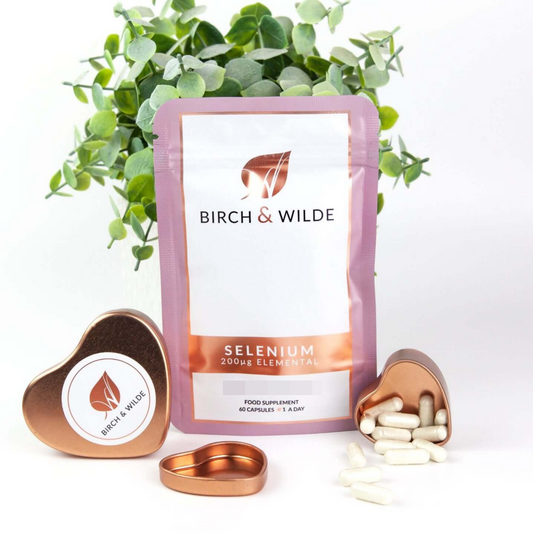
Trace minerals such as selenium play a role here. Present in foods such as nuts, seafood, and whole grains, selenium contributes to the normal function of antioxidant systems within the body. These systems help protect cells from oxidative stress as part of everyday metabolism and immune activity.
For those who choose to supplement, Birch & Wilde Selenium is formulated to support these normal processes as part of a balanced wellness routine. It is not a substitute for medical care, nor a promise of protection. It is simply one way to ensure that the body has access to the nutrients it relies on daily.
Living Well Without the Illusion of Control
When someone you love becomes unwell, health begins to look different. It is less about long-term ideals and more about what can be done today. A nourishing meal. A good night’s rest. A walk in fresh air. A reminder to attend your own screening appointment.
None of these actions offer certainty. Yet together, they form a practice of care.
Over time, this practice becomes less about fear and more about respect for the body that carries you through ordinary days and extraordinary challenges alike.
A Gentle Closing Thought
We cannot control every outcome. That truth remains unchanged.
What we can do is continue to nourish, to rest, to move, and to support our bodies in the ways available to us now. Health is not a guarantee; it is a series of quiet decisions made consistently over time.
And sometimes, that is the most meaningful form of care we can offer ourselves.