
Happy Valentine’s Day, My Heart

February arrives dressed in familiar cues. Red roses in shop windows. Chocolates stacked by the till. Valentine’s Day has become shorthand for romance, but this month also carries another, often quieter message. It is Heart Month, a reminder that the heart is more than a symbol. It is a working organ, shaped daily by how we live.
Perhaps this is the year to pause and look at Valentine’s Day differently. Not as a performance of love, but as an invitation to care.
The Heart Beyond the Card
For many of us, especially women, heart health is something we assume we will “get to later”. Work deadlines, family responsibilities, and the constant background hum of stress tend to come first. Yet heart disease remains one of the leading health concerns for women in the UK, and it rarely announces itself loudly.
The risk often builds quietly through years of interrupted sleep, skipped meals, chronic stress, and the habit of putting everyone else first. The good news is that the same quiet, daily choices can also become powerful tools for protection.
What Heart-Supportive Eating Actually Looks Like
Heart-friendly food does not need to be restrictive or joyless. It looks a lot like real life, done with a little more intention.
It might mean cooking with olive oil more often than butter, or choosing oily fish such as salmon or sardines a couple of times a week. It can be as simple as adding lentils to a stew, tossing a handful of walnuts into a salad, or keeping berries and apples within easy reach rather than relying on ultra-processed snacks.
It also means eating regularly. Skipping meals to get through the day may feel productive, but it places unnecessary strain on blood sugar balance and the cardiovascular system. A simple lunch, even if it is soup and good bread, is still an act of care.
Cholesterol Without the Panic
Cholesterol has earned a fearful reputation, but the story is more balanced than headlines suggest. Our bodies need cholesterol to function. Issues arise when levels are persistently high alongside inflammation, oxidative stress, and lifestyle strain.
Rather than chasing perfection, small adjustments matter more. Reducing processed foods, choosing whole grains, eating more vegetables, and moving regularly all support healthier cholesterol levels over time. Alcohol, often normalised as stress relief, can quietly undermine these efforts when consumed frequently.
Real change rarely comes from dramatic overhauls; it grows out of small, repeatable choices that quietly support you over time.
Stress Is a Heart Issue, Too
Emotional stress is not separate from physical health. Long-term stress raises blood pressure, increases inflammation, and places measurable strain on the heart. For many adults in their late 30s and beyond, stress is no longer occasional. It is woven into daily life.
Supporting heart health therefore includes learning to slow down in realistic ways. A walk after supper rather than collapsing on the sofa. Going to bed a little earlier when possible. Saying no, occasionally, without guilt. These are not luxuries. They are protective habits.
Love as a Daily Practice
What if Valentine’s Day became less about grand gestures and more about shared care?
Cooking a nourishing meal together instead of booking an expensive dinner. Walking side by side, even for twenty minutes. Sitting down to eat without phones. Choosing foods that leave you feeling steady rather than wired.
Love, in this sense, becomes practical. It becomes sustainable.
Supporting the Heart From Within
At Birch & Wilde, we believe that wellbeing is built gently, from the inside out. Food comes first, always. Thoughtfully chosen supplements can support the body when life is demanding.
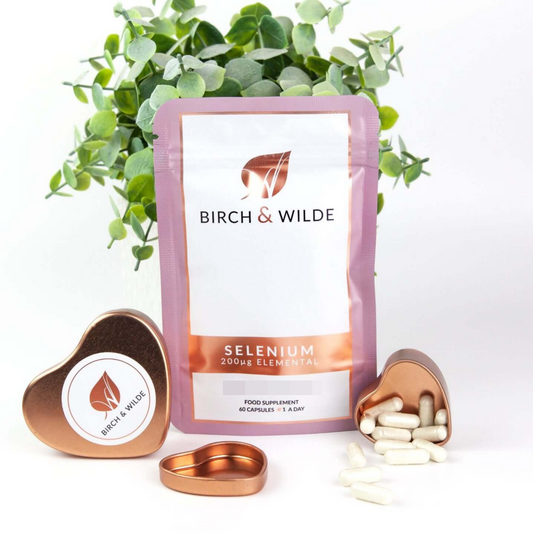
Selenium contributes to the protection of cells from oxidative stress, an important factor in long-term cardiovascular health. Vitamin B Complex supports normal energy metabolism and nervous system function, particularly valuable during periods of stress and fatigue.
These are not quick fixes. They are quiet allies, working in the background as part of a broader approach to care.
A Different Valentine
This February, consider celebrating the heart in a fuller sense. Not just as a symbol of romance, but as the centre of resilience, vitality, and longevity.
Caring for it does not require perfection. It is shaped in the everyday. In how we eat most days, how we manage stress we carry quietly, how often we move our bodies, and how consistently we choose care over neglect. These choices may feel small in the moment, but together they are powerful.
Your heart does not need extremes. It responds best to consistency, patience, and choices made with care over time. That might look like cooking a nourishing meal at home, choosing a walk over another hour at your desk, supporting your body with high-quality nutrients, or simply paying attention sooner rather than later.
Because love, at its best, is not loud. It is steady. It is nourishing. It is something we choose, day after day.