
The Silent Fire: What Chronic Inflammation Has to Do With Breast Health

There is something happening in a great many bodies right now that has no dramatic symptoms, no obvious warning signs, and no moment of sudden onset. It does not keep you in bed. It does not send you to the doctor. It simply exists, quietly and persistently, in the background of an otherwise ordinary life.
It is called chronic low-grade inflammation, and it is one of the most consequential and least discussed aspects of long-term health that exists.
This Breast Cancer Prevention Week, we want to talk about it honestly, carefully, and within the bounds of what the science actually supports, because this is a topic where precision matters and where the line between empowering information and irresponsible claims must be held with care.
What inflammation actually is, and why chronic matters
Inflammation is not, in itself, a problem. Acute inflammation is one of the body's most brilliant defence mechanisms. When you cut your finger, twist your ankle, or fight off an infection, the inflammatory response rushes resources to the site of the problem, neutralises the threat, and then stands down. It is purposeful, temporary, and essential.
Chronic inflammation is something entirely different. It is what happens when that same immune response does not fully stand down. When the body remains in a low-level state of alert, not because of an active threat, but because of the accumulated signals of modern life: a diet high in processed foods and refined sugars, sustained psychological stress, disrupted sleep, physical inactivity, excess body fat, alcohol consumption, and environmental exposures that the immune system registers as hostile. The fire never quite goes out. It just burns quietly, indefinitely, doing slow and cumulative damage to cells, tissues, and the biological environment in which they exist.
There is evidence to indicate that chronic inflammatory changes are associated with breast cancer risk. Chronic low-grade inflammation is recognised as a significant factor in various health outcomes, including the development and progression of breast cancer. The research in this area is still evolving, and we want to be honest about that. Only one inflammatory marker, C-reactive protein, has been studied extensively, and has some evidence of a positive association with breast cancer risk. Evidence associating other inflammatory biomarkers with the development of breast cancer remains limited. Science rarely offers clean, simple answers on complex biological questions, and this is no exception. What the evidence does consistently support, however, is that the internal environment matters, and that we have more influence over it than most of us have been told.
The lifestyle connection
This is where the conversation becomes not just interesting but genuinely useful, because the factors that drive chronic inflammation are, to a significant degree, the same factors that are within our power to address.
Regular exercise reduces breast cancer risk by lowering hormones like oestrogen, especially post-menopause, and reducing body fat. It also improves immune function and reduces inflammation. Physical activity reduces inflammatory-causing factors in your body and increases anti-inflammatory factors. This does not mean that exercise is a guarantee of anything. It means that movement is one of the most direct levers we have for influencing the inflammatory state of the body, and it is available to almost everyone.
Diet tells a similar story. The Mediterranean dietary pattern, rich in vegetables, fruits, fish, nuts, and olive oil as the main cooking oil, can reduce cellular oxidative stress and inflammatory responses, while both smoking and excessive alcohol consumption can cause oxidative stress and inflammation. A diet high in fruits and vegetables, particularly non-starchy vegetables and those rich in carotenoids, whole grains, and fibre may help reduce breast cancer risk.
Sleep, stress, and body weight complete the picture. Chronic sleep deprivation elevates inflammatory markers measurably. Sustained psychological stress, the kind that the high-functioning, quietly exhausted woman carries without naming it, maintains cortisol at levels that drive systemic inflammation over time. Excess body fat has been linked to a higher risk of breast cancer in postmenopausal women due to its effects on inflammation, hormone levels, and factors that regulate cell growth.
None of this is about perfection, and none of it is about fear. It is about understanding that the daily choices we make, in aggregate and over time, create an internal environment that either supports or challenges the body's ability to maintain healthy cellular function.
The role of nutrition: what we know and what we do not
We want to be careful here, and we want you to trust us precisely because we are being careful.
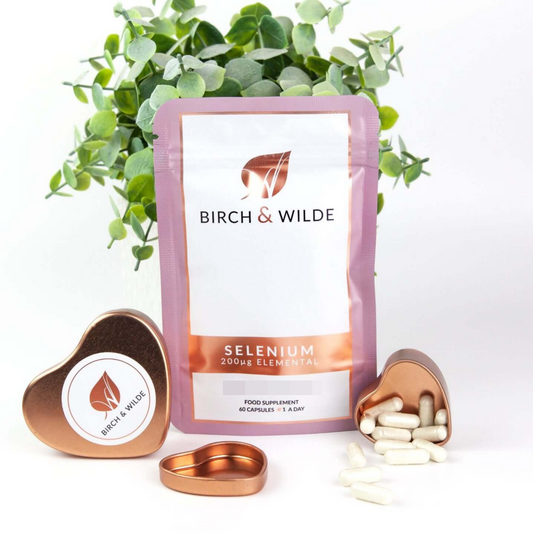
There is genuine and growing research interest in the role of specific micronutrients in supporting the body's inflammatory response and overall cellular health. Selenium, for instance, is an essential trace mineral that functions as a cofactor for several of the body's key antioxidant enzymes. Prolonged selenium deficiency has been conclusively linked to an elevated risk of various diseases, including cancer and inflammatory conditions. The relationship between selenium and breast cancer specifically is an area of active investigation, and the honest answer is that the evidence is suggestive but not yet conclusive. What is clear is that selenium deficiency is common in the UK, where soil selenium levels are low, and that adequate selenium status supports the antioxidant and anti-inflammatory pathways that matter for long-term health.
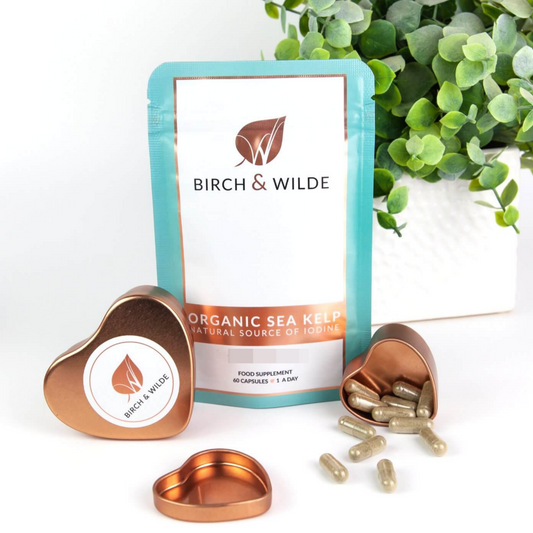
Sea kelp is one of the richest natural sources of iodine, a mineral that supports thyroid function and, through it, the hormonal balance that plays a documented role in breast health. Research has suggested that the combination of adequate iodine and selenium levels may be associated with a lower risk of breast cancer, though this evidence requires further investigation before firm conclusions can be drawn.
We carry both Selenium and Sea Kelp in the Birch & Wilde range, and we offer them here not as a solution to a complex biological question, but as part of a considered, evidence-informed approach to giving the body the nutritional foundation it needs. Supplements do not prevent cancer. We will never say otherwise. What they can do, when used thoughtfully alongside a genuinely healthy lifestyle, is support the internal environment in which health is more likely to flourish.
The most important thing you can do this week
Know your body. That means checking your breasts regularly, attending every screening you are invited to, and reporting changes to your GP promptly. Early detection remains the most powerful intervention available, and no amount of lifestyle optimisation changes that fundamental truth.
It also means paying honest attention to the internal environment you are creating, not with anxiety or rigidity, but with the quiet, steady intention of someone who understands that health is built in the ordinary moments, in what you eat most days, in how you move your body, in how much you sleep, in whether you address the stress that has been running too high for too long.
Studies show that at least 30 percent of breast cancer cases could be prevented through lifestyle and environmental changes. That is not a small number. That is not a marginal opportunity. That is a significant proportion of diagnoses that research suggests may be influenced by choices within our reach.
The silent fire is real. And we have more say in it than most of us have been led to believe.
Sources
Xuan, Y. et al. The Role of Chronic Inflammation in the Development of Breast Cancer. PMC, 2021. ncbi.nlm.nih.gov/pmc/articles/PMC8345713
Li, Y. et al. The Association of Systemic Immune-Inflammation Index with Incident Breast Cancer and All-Cause Mortality. Frontiers in Immunology, 2025. ncbi.nlm.nih.gov/pmc/articles/PMC11802490
Dallal, C.M. et al. Inflammatory Biomarkers and Breast Cancer Risk: A Systematic Review. PubMed, 2020. pubmed.ncbi.nlm.nih.gov/32731638
Breast Cancer UK. Being Active and Exercise. breastcanceruk.org.uk
Breast Cancer UK. Health and Lifestyle. breastcanceruk.org.uk
Breast Cancer Research Foundation. Diet and Breast Cancer Risk. bcrf.org
Manjer, J. et al. Serum Iodine and Breast Cancer Risk: A Prospective Nested Case-Control Study Stratified for Selenium Levels. Cancer Epidemiology, Biomarkers & Prevention, 2020. aacrjournals.org
Benstoem, C. et al. Selenium in Cancer Management: Exploring the Therapeutic Potential. Frontiers in Oncology, 2024. frontiersin.org