
International Women’s Day and the Cost of Not Being Heard

When “It’s Probably Nothing” Is Not Good Enough
There is often a moment after that sentence is spoken. You leave the appointment, step back into the street, and pause for a second before walking away. Part of you feels relieved. Another part of you feels strangely unsettled. You wonder whether you should have explained things better, asked another question, pushed a little further. Then life resumes, work calls, errands wait, children need collecting, and the doubt quietly follows you home.
“It’s probably nothing.”
It is delivered gently. Calmly. Often with a reassuring smile. And yet, for countless women, it marks the beginning of something else entirely. A slow internal recalibration. A quiet doubt. A decision to endure rather than insist.
Over time, that endurance becomes a reflex.
Across conversations, across countries, across healthcare systems that differ in structure but not always in outcome, the pattern repeats. Pelvic pain that lingers. Bloating that persists. Exhaustion that does not feel like ordinary tiredness. A sense that something is off. Followed by reassurance. Followed by delay.
If this experience sounds familiar, you are far from alone.
Many women do not begin by being dismissed. They begin by dismissing themselves.
We do not want to overreact. We do not want to seem dramatic. We do not want to waste anyone’s time.
I have experienced what it feels like to raise a concern and sense it being gently waved away. The details are not important. What stayed with me was not anger. It was the destabilising realisation that self-trust can erode when your voice is softened by someone else’s authority.
International Women’s Day often focuses on visible achievements. Leadership. Representation. Milestones. Those matter. But there is another form of equity that receives far less attention.
The right to be believed about your own body.
The Culture of Endurance
Endometriosis affects around one in ten women in the UK. Diagnosis can take years. Years of pain reframed as normal. Years of adapting schedules, careers, and relationships around discomfort that should have prompted investigation.
Women are exceptionally capable. We manage households, careers, communities. We absorb pressure. We adjust.
But there is a quiet danger in being praised for tolerance.
When pain becomes something we are expected to accommodate rather than examine, something fundamental has shifted.
Endurance is admirable. Silence is not.
The Subtle Symptoms That Matter
Ovarian cancer rarely announces itself loudly. Its symptoms are often persistent rather than dramatic: bloating that does not settle, pelvic discomfort, feeling full quickly, urinary urgency.
Each symptom in isolation can appear benign. That is precisely why they are overlooked.
The issue is not hysteria. It is history. Women’s pain has long been mischaracterised as emotional, hormonal, exaggerated. Research gaps remain. Bias, even unintentional, persists.
And so the responsibility quietly shifts onto women to monitor, to notice patterns, to return when something does not resolve.
Not because we are paranoid.
Because we are paying attention.
Being Heard Is Healthcare
Healthcare professionals across the UK are working within intense pressures. Systems are stretched. Time is limited. Most clinicians are committed and compassionate.
And yet, being busy does not negate the reality that women’s symptoms are too often delayed, minimised, or redirected.
Equity in health is not symbolic. It is procedural.
It looks like a woman saying, calmly, “This is still happening.”
It looks like asking, “What else could this be?”
It looks like seeking another opinion without embarrassment.
It looks like refusing to apologise for wanting clarity.
It is not confrontation. It is stewardship.
On International Women’s Day, perhaps the most grounded act of empowerment is not a slogan. It is self-trust.
The Courage of Self-Trust
Caring for your health is not an act of superstition or control. It is an act of stewardship.
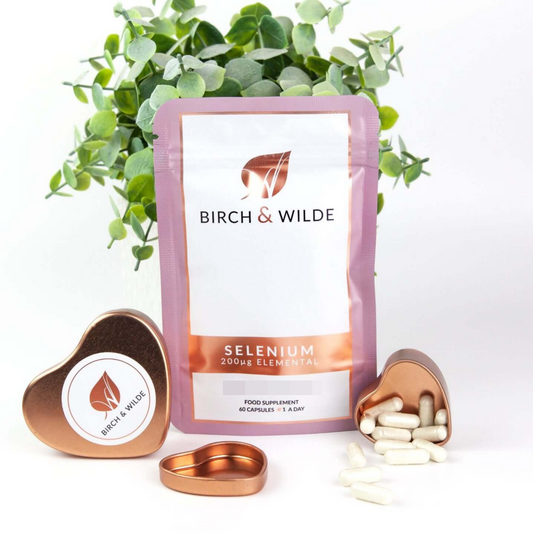
Long before illness ever enters the picture, the body asks for small, steady forms of support: nourishing food, restorative sleep, daily movement, and the quiet discipline of paying attention. Nutritional support can play a role as well. Selenium contributes to normal antioxidant function and thyroid health. Vitamin B Complex supports cellular energy and metabolic processes. Ashwagandha supports the body’s response to stress. These are not promises of protection. They are part of a broader practice of respecting how the body works.
At Birch & Wilde, that philosophy guides everything we formulate. Support the body honestly. Respect biology. Avoid exaggeration.
But even the most thoughtful lifestyle cannot replace one essential responsibility; Listening to yourself.
Too many women have learned to soften their instincts before anyone else has the chance to dismiss them. We minimise. We rationalise. We tell ourselves we are probably overthinking.
And yet the body has a quiet intelligence of its own.
When something persists.
When something feels unfamiliar.
When that small inner voice says, this isn’t right.
Do not silence it.
Return to the conversation. Ask the question again. Seek the second opinion. Persist with calm certainty until you are heard.
No one lives inside your body but you.
On International Women’s Day, that may be the most powerful reminder of all.
Your voice is not an inconvenience.
It is your first line of care.